Happy 18th Birthday, Sweet Iris
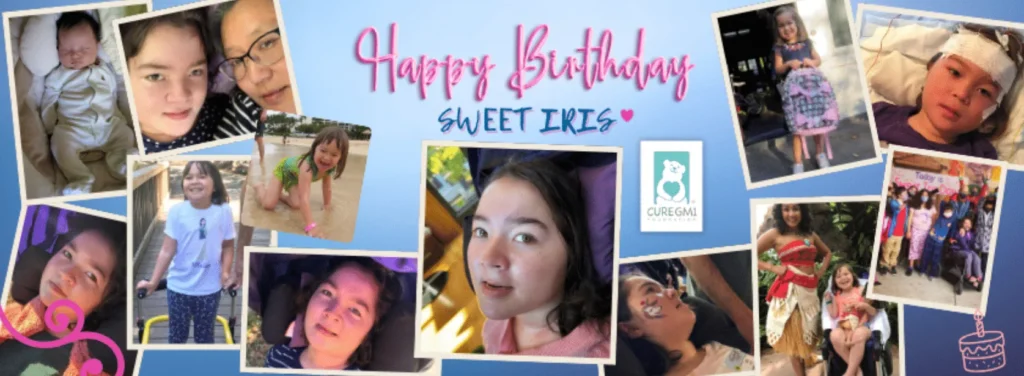
An update on Sweet Iris as she heads into adulthood, as written by iris’ mom, christine waggoner
Adulthood. Our Iris is 18 years old. Birthdays are often bittersweet for families impacted by GM1. They’re supposed to be a time of celebration. While many kids Iris’ age are making plans for college or post-high school travel, Iris will never have those opportunities. For us, the passage of time is less a milestone to celebrate and more a reminder that time is limited. Our children are facing certain death. We do our very best to shove the feelings of dread aside and to make beautiful memories. GM1 families learn to live with that constant shadow of grief every single day.
When we first received Iris’s diagnosis at age 5, the doctors first guessed that she might have only 6 years to live. With a rare disease, there is such a lack of information and understanding. Most doctors are at a loss, perhaps never having encountered GM1 gangliosidosis. In this case, we are grateful for their lack of knowledge, as it means we get more time with Iris. We’re grateful for every bit of time with our sweet young lady, and each day is a gift.
The problem with ultra-rare diseases like GM1 is that the progression of the disease is rapid, and research and drug development are painfully slow. To make a meaningful difference, an advocate must accept that the cards are stacked against them and that their loved ones may not ultimately benefit from the donations they make or the time they spend raising awareness of the disease. Well before the first clinical trials for GM1 in 2019, we knew that our sweet girl’s central nervous system would never be repaired. We’ve continued fighting for all GM1 families regardless, knowing that our daughter would be unlikely to benefit from our work. Our family, friends, colleagues, and complete strangers have also continued to contribute to our mission of one day finding treatment or a cure. For that, we are truly grateful.
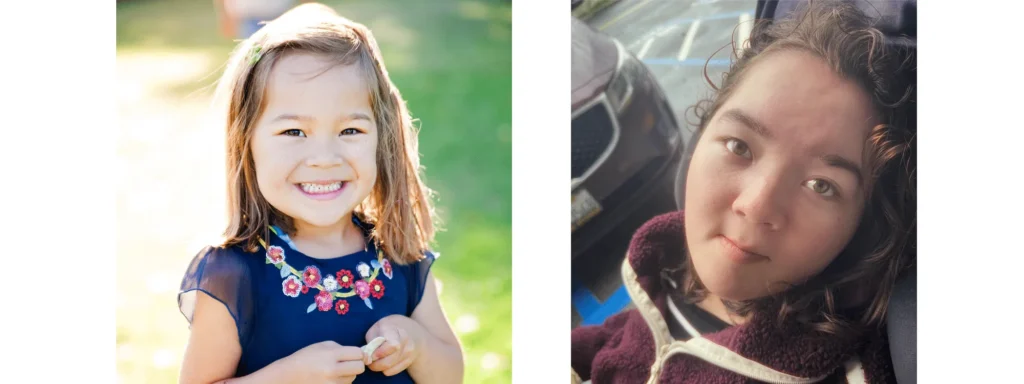
Due to the work we have been doing, I genuinely believe that in the future, there will be a child diagnosed with GM1 whose doctor is able to provide meaningful treatment options. That is the hope that keeps us moving forward with the Cure GM1 mission. Even today, a child who is newly diagnosed with Type 2 GM1 may be presented with several options, depending on whether or not they can meet criteria for the trial or medication being studied. Although the treatments are not approved and commercialized, this is a radical change from the landscape our family encountered. On Iris’ 18th birthday, I believe this is truly something to celebrate, and I believe it is part of her legacy. She had made hope a reality for so many future children diagnosed with GM1. And, there is always more that can be done.
Our current focus is enzyme replacement therapy (ERT). We truly believe that enzyme replacement therapy is likely the most reliable treatment option right now, with the potential to help the largest number of people impacted by GM1. For instance, while many of the past treatment options presented for GM1 have failed to address the needs of our community’s Type 1 families, ERT may hold promise for them, as well. Imagine how many young lives and families could be changed if ERT becomes a reality.
We do this work to honor Iris’s life and to make meaning of the incredible suffering she has endured. I truly miss her sweet little voice. I miss the days walking on the beach holding her hand. I long for the days when she does not grimace in pain. This work is for all those dying due to GM1. As we celebrate her 18 years and her transition to adulthood, please join us again by showing your support.
Learn more about Iris’ Story
Selected posts title
-
October 2026 Cure GM1 Catalyst
September’s Do It for GM1 raised $34,804.78, conference highlights, Milo’s story, the Basion partnership, a UCSF prenatal gene therapy survey, and year-end plans.
-
My Report Says GLB1 Is Linked to Both GM1 and Morquio B. Do I Have Both Diseases?
Understanding your genetics report, and how the GLB1 gene links GM1 gangliosidosis and Morquio B,…
-
September 2026 Cure GM1 Catalyst
Fall is already here and this month, is your chance to participate in our Do It For GM1 campaign. And we have only one month to go before our virtual community conference! We just published the full agenda and the speaker bios. Check it out and register now.