
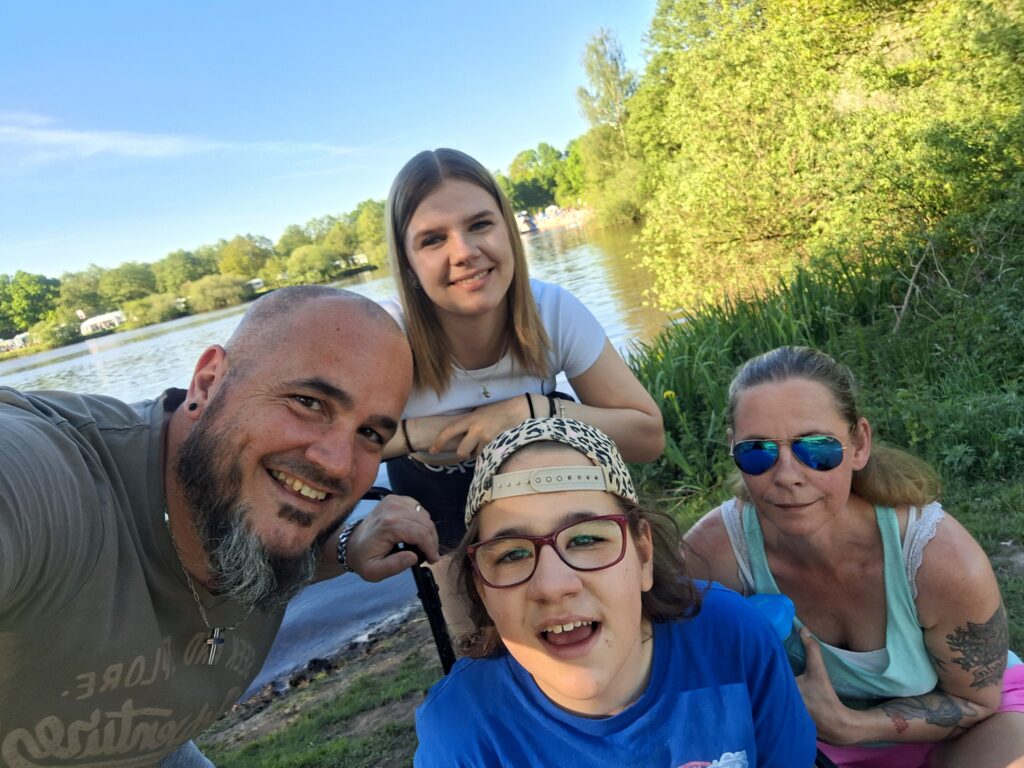
How is Frieda doing right now with her symptoms, the progression of the disease, and so on?
Frieda is actually doing quite well at the moment. Considering that, at the time of her diagnosis, we were told she wouldn’t live past the age of 10, she is doing an absolutely amazing job at age 15! Of course, we notice the unstoppable progression of the disease, and that things Frieda used to do very well are now becoming increasingly difficult for her.
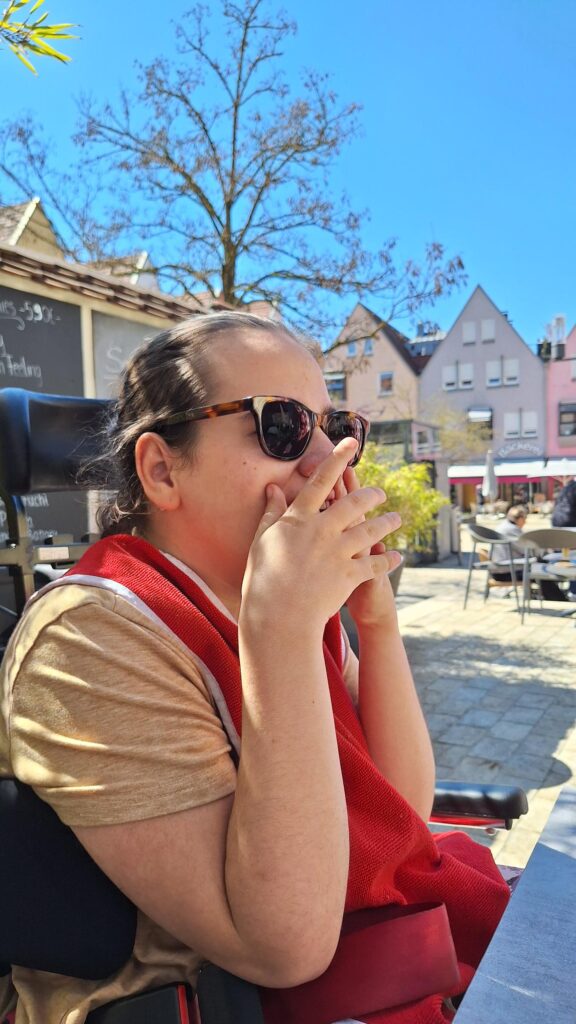
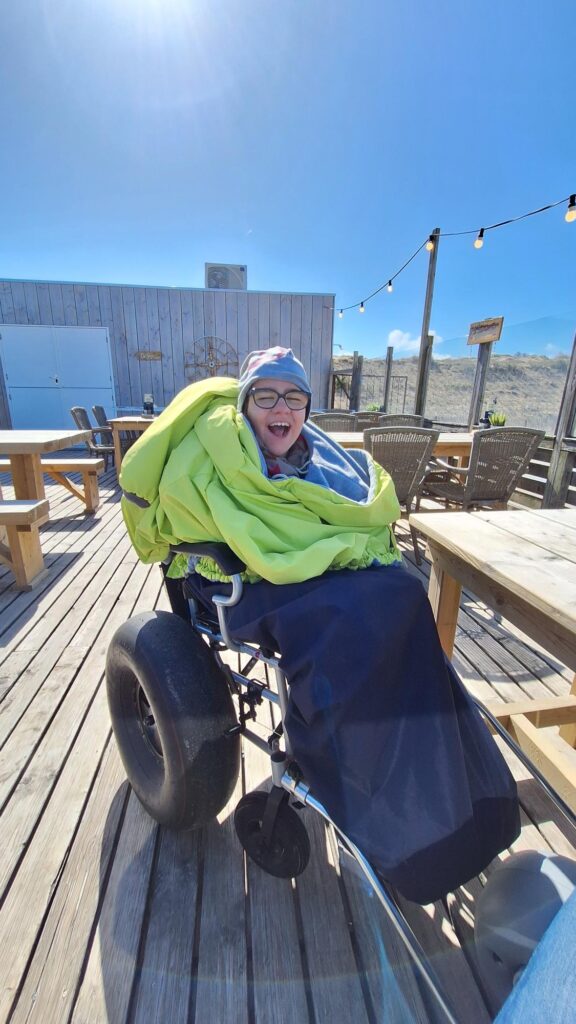
She still manages to tell us what she wants and what is on her mind using her vocabulary of about 15 words. She still laughs a great deal, and that is one of the things that makes her so wonderful. Frieda is also still able to walk while holding hands and with support, though only for a few meters. She now relies on a wheelchair for the most part. Her seizures are also becoming more frequent, but we are trying to keep them to a minimum using medication (Briviact and Lamotrigine). Her excessive salivation is being managed very effectively with Scopoderm patches. Otherwise, she simply takes Movicol to treat fecal impaction.
In what ways did the disease take you by surprise?
As I mentioned, we were originally told that Frieda wouldn’t live beyond the age of 10. I believe we made the right choices regarding therapeutic support and interventions for Frieda at just the right times. We were the very first GM1 family to start using the Galileo vibration plate. Frieda has undergone hippotherapy, physical therapy, speech therapy, and occupational therapy, and we have taken her for dolphin therapy three times. We feel that all of this contributed to where Frieda is today and to the fact that she remains in such high spirits.

How does Frieda cope with the progression of the disease?
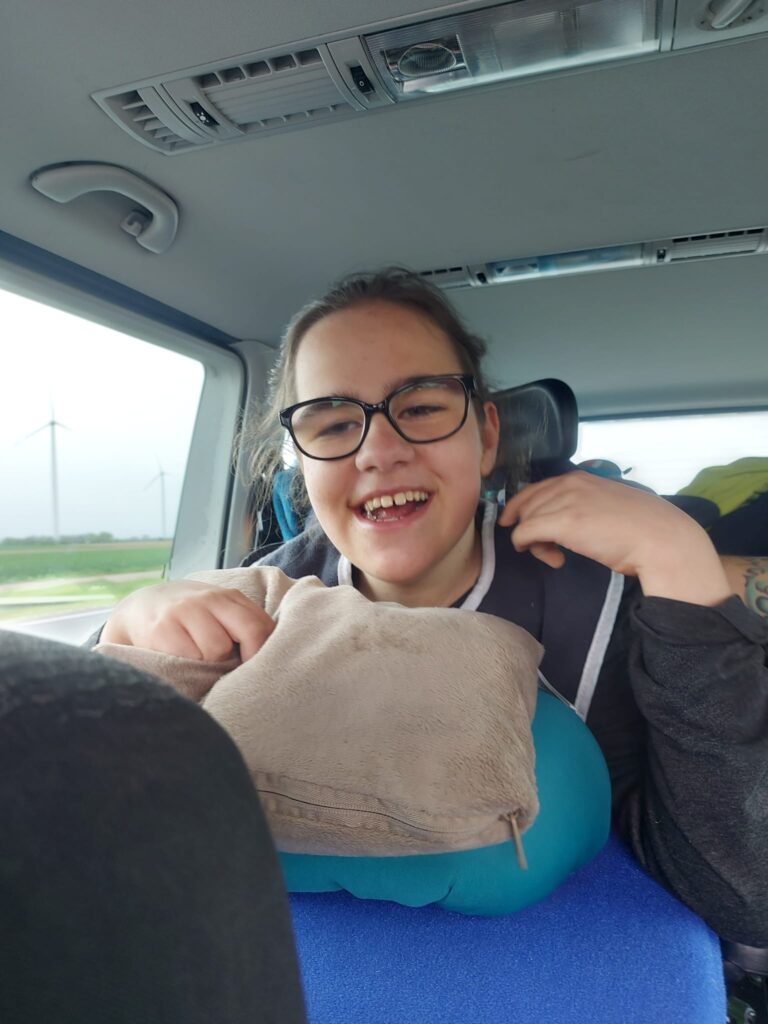
We get the sense that she is, to some extent, aware of it. Whenever she realizes what is happening in certain situations, she tends to withdraw into herself for a brief moment. However, since Frieda attends a special needs school for children with physical and cognitive developmental differences, where every child has their own unique characteristics, she doesn’t stand out. In that environment, this makes her feel, in a way, “normal.”
Fundamentally, though, we feel that Frieda is simply doing her own thing and refuses to let her illness have a negative impact on her. She is funny, cheerful, and full of life. She demonstrates this to us day after day.
How has GM1 continued to affect your family over the past few years since we first shared your story?
We have certainly gone through some difficult phases, particularly when things appeared to be taking a turn for the worse. During her teenage years, Frieda’s older sister struggled significantly with her thoughts and feelings regarding both GM1 and Frieda herself. As parents, we naturally find ourselves dwelling on thoughts about the future from time to time. Yet, all things considered, we have to say that Frieda has taught us to live life more mindfully. She has taught us not to take things for granted, but also not to make a mountain out of a molehill. Trivial matters that other people get massively worked up about simply don’t bother us much anymore.
Thanks to Frieda, we have experienced things that many other people may never get the chance to do. We’ve swum with dolphins and visited the Caribbean. Frieda and I (Dad) even flew all the way across Germany in a small propeller plane just to make the journey more comfortable for her. We have already shared these and many other experiences, and we hope to create many more cherished memories together in the future. We love to travel, and Frieda truly enjoys being in new places. She loves the sea just as much as she loves the mountains. She loves being with her family, and when she laughs, everyone laughs along. She shows us what truly matters in life, and we are incredibly proud of her!


From Frieda’s Father
Hello,
My four year old daughter “Frieda” is diagnosed in GM1. We searched for three years and last December we got this horrible diagnosis.
In Germany it’s very hard to get help. Nobody wants to conduct research in GM1 because we were told that there are only 15 living children in our country.
We are still at the beginning in building a network and we are thankful for any help that we can get. We hope to be right here and that you can perhaps help us.
If we can do anything for you here in Germany please let us know about it.
Sorry for my English! I am trying my best.
Yours,
Steffen
