FAMILY RESOURCE SERIES Version 1 · July 2026
Written by Vanessa Rangel Miller, CGC, MBA, Cure GM1 Foundation Board Member
GM1 Diagnostic Testing Guide
Introduction: GM1 Testing Types
GM1 gangliosidosis is a rare, inherited lysosomal storage disease caused by mutations in the GLB1 gene, which encodes the enzyme beta-galactosidase (beta-gal). Genetic changes, called variants (mutations), in both copies of the GLB1 gene can prevent the enzyme from working properly. This leads to a toxic buildup of GM1 ganglioside, a harmful substance that primarily affects the brain and nervous system. The disease spans a broad spectrum: severe infantile forms (Type 1) with onset in the first months of life; juvenile (Type 2) and adult-onset (Type 3) forms. [1][2]
[Note: Mucopolysaccharidosis type IVB (Morquio type B syndrome) is a milder skeletal condition caused by the same gene though not further reviewed here.][3]
There are two complementary types of laboratory testing which may be used to diagnose GM1, confirm carrier status, or guide family planning:
- Beta-galactosidase enzyme activity testing – a biochemical assay that measures how much functional enzyme is present in blood or skin cells.
- GLB1 gene sequencing – a molecular genetic test that identifies the changes in GLB1 that may be causative of GM1.
Both test types are available through CLIA-certified laboratories in the United States as well as labs around the world with country-specific regulations. Testing may be ordered by metabolic or biochemical geneticists, medical geneticists, pediatric or adult neurologists, primary care physicians, or genetic counselors. This guide covers what each test does, reasons to order it, how to access it, and which laboratories and specialists can help.
Part i: Beta-Galactosidase Enzyme Activity Testing
What Is This Test?
The beta-galactosidase enzyme assay measures the activity level of the beta-gal enzyme in a patient’s cells. It is the first-tier diagnostic test for GM1 gangliosidosis.[1]
- Markedly reduced or absent enzyme activity confirms the diagnosis of GM1 gangliosidosis.
- Activity levels help classify disease severity: lower activity correlates with more severe disease (Type 1); residual activity with milder phenotypes (Types 2 and 3), however, it is difficult to provide an accurate correlation between enzyme activity and disease severity.[2][4]
What Samples Are Used for This Test?
- Whole blood (leukocyte cells)
- Dried blood spots
- Cultured fibroblasts* (skin punch biopsy sent for a cell culture)
*Requires special handling and should be ordered through a knowledgeable healthcare provider
When to Order This Test?
Beta-galactosidase enzyme testing may be ordered for a suspected or clinical diagnosis of GM1. Clinical indications may include:
- Unexplained neurological regression, progressive developmental delay, or loss of motor skills
- Clinical findings or skeletal abnormalities suggestive of lysosomal storage disease
- Biochemical test results suspicious for GM1 including an oligosaccharide profile consistent with GM1
- Family history of GM1 gangliosidosis (affected sibling or close relative)
- Abnormal newborn screening result suggestive of GM1
- GLB1 variant of uncertain significance (VUS)
Part II: GLB1 Gene Sequencing
What Is This Test?
While enzyme activity testing tells you how much enzyme is present, GLB1 genetic testing reveals why by identifying the exact genetic or DNA changes that cause the enzyme deficiency. Genetic testing uses gene sequencing to look for single base changes, small insertions/deletions, large exon-level deletions/duplications, or genetic rearrangements. Genetic testing is essential for:
- Confirming the genetic diagnosis
- Correlating genotype with clinical signs or symptoms to understand likely disease course
- Supporting clinical trial enrollment – most trials require a confirmed genetic diagnosis
- Carrier testing for parents, siblings, and extended family members
- Reproductive planning, including prenatal diagnosis and preimplantation genetic testing (PGT-M)[5]
What Samples Are Used for This Test?
- Whole blood (leukocyte cells)
- Dried blood spots
- Oral swabs, including buccal (cheek) and saliva
- Cultured fibroblasts* (skin punch biopsy sent for a cell culture, rarely used for gene sequencing)
When to Order This Test?
GLB1 gene sequencing may be ordered for a suspected or clinical diagnosis of GM1. Clinical indications may include:
- Unexplained neurological regression, progressive developmental delay, or loss of motor skills
- Clinical findings or skeletal abnormalities suggestive of lysosomal storage disease
- Beta-galactosidase enzyme deficiency
- Abnormal newborn screening result suggestive of GM1
- Family history of GM1 gangliosidosis (affected sibling or close relative)
What types of genetic testing exist?
GLB1 Single Gene Sequencing
- What it detects: Analyzes the coding regions of the GLB1 gene
- Best used when: Primary test when enzyme activity is low and clinical suspicion is clear
Multi-Gene Panel (many types)
- What it detects: Sequences the coding regions of 10’s to 100’s of genes that are known to be related to a group of conditions or symptoms at the same time
- Best used when: When diagnosis is uncertain and other lysosomal conditions are possible
Exome Sequencing
- What it detects: Analyzes the coding regions of all genes in the genome
- Best used when: When diagnosis is uncertain and other non-lysosomal conditions are possible
Genome Sequencing
- What it detects: Analyzes the coding and non-coding regions of all genes in the genome
- Best used when: When prior genetic testing is non-diagnostic
Test type: Targeted Familial Variant Testing
- What it detects: Tests only for the specific GLB1 variant(s) already identified in the family
- Best used when: For carrier testing of family members once variants are known in a person with GM1
Important collection Notes
Always confirm shipping requirements with the lab before collecting a sample. Ship Monday through Thursday to avoid weekend transit delays, and check with the laboratory for holiday closures. For patients who reside in the state of New York, verify a current permit is in place to order testing performed by a non-New York laboratory.
Testing Laboratories (listed here for relevance to GM1)
Laboratories offering both biochemical and genetic testing
Greenwood Genetics Center – SC
- Website: Greenwood Genetic Center Diagnostic Laboratory
- Enzyme Tests:
- Genetic Tests:
- GLB1 Sequencing (Test code DGLB)
- Sample Requirements: Refer to each test link
- Email: labsupport@ggc.org
- Phone: 1-800-473-9411
Lysosomal Diseases Testing Laboratory (LDTL) – Thomas Jefferson University – PA
- Website
- Enzyme Tests:
- Lysosomal enzyme screen: Single beta-galactosidase enzyme
- Sample Requirements
- Email: David.Wenger@Jefferson.edu
- Phone: 215-955-1666
Mayo Clinic Laboratories – Minnesota
- Website: Mayo Clinic Laboratories
- Enzyme Tests:
- Genetic Tests:
- Sample Requirements: Refer to each test link
- Email: mcl@mayo.edu
- Phone: 800-533-1710
The Hospital for Sick Children – Rapid Response Laboratory – Toronto, Canada
- Website: SickKids Lab Testing Services
- Enzyme Tests:
- Lysosomal Enzymes Panel (Leukocytes; Test code ZBGLW)
- Lysosomal Enzymes Panel (Fibroblasts; Test code ZBGLR)
- Genetic Tests: N/A
- Sample Requirements
- Email: Not Listed
- Phone: 416-813-7200
Laboratories offering genetic testing
Fulgent – CA
- Website: Fulgent Genetics
- Enzyme Tests: N/A
- Genetic Tests:
- Sample Requirements
- Email: info@fulgentgenetics.com
- Phone: (626) 350-0537
Labcorp | Invitae – CA
- Website: Labcorp | Invitae
- Enzyme Tests: N/A
- Genetic Tests: SEVERAL
- Invitae Comprehensive Lysosomal Storage Disorders Panel (Test code: 06170)
- Invitae Neurodevelopmental Disorders (NDD) Panel (Test code: 728434)
- Sample Requirements
- Email: clientservices@invitae.com
- Phone: 800-436-3037
PreventionGenetics – WI
- Website: PreventionGenetics
- Enzyme Tests: N/A
- Genetic Tests:
- Lysosomal Storage Disorders Panel (Test code: 13065), test details
- Sample Requirements
- Email: support@preventiongenetics.com
- Phone: 715-387-0484
Other laboratories with large panels, exome, or genome sequencing for diagnostic screening that may include the GLB1 gene are also available through the following labs: Ambry Genetics (neurology test menu), GeneDx, Natera (Zenith carrier screen).
Some laboratories offer no-charge, sponsored genetic testing programs through which the costs of testing may be paid by external companies. Information about relevant programs can be found on the laboratory websites below:
- GeneDx (sponsored testing programs)
- Labcorp | Invitae (genetic testing access programs)
Broad US and international laboratory directories are available using the following resources:
Part III – Finding a Specialist
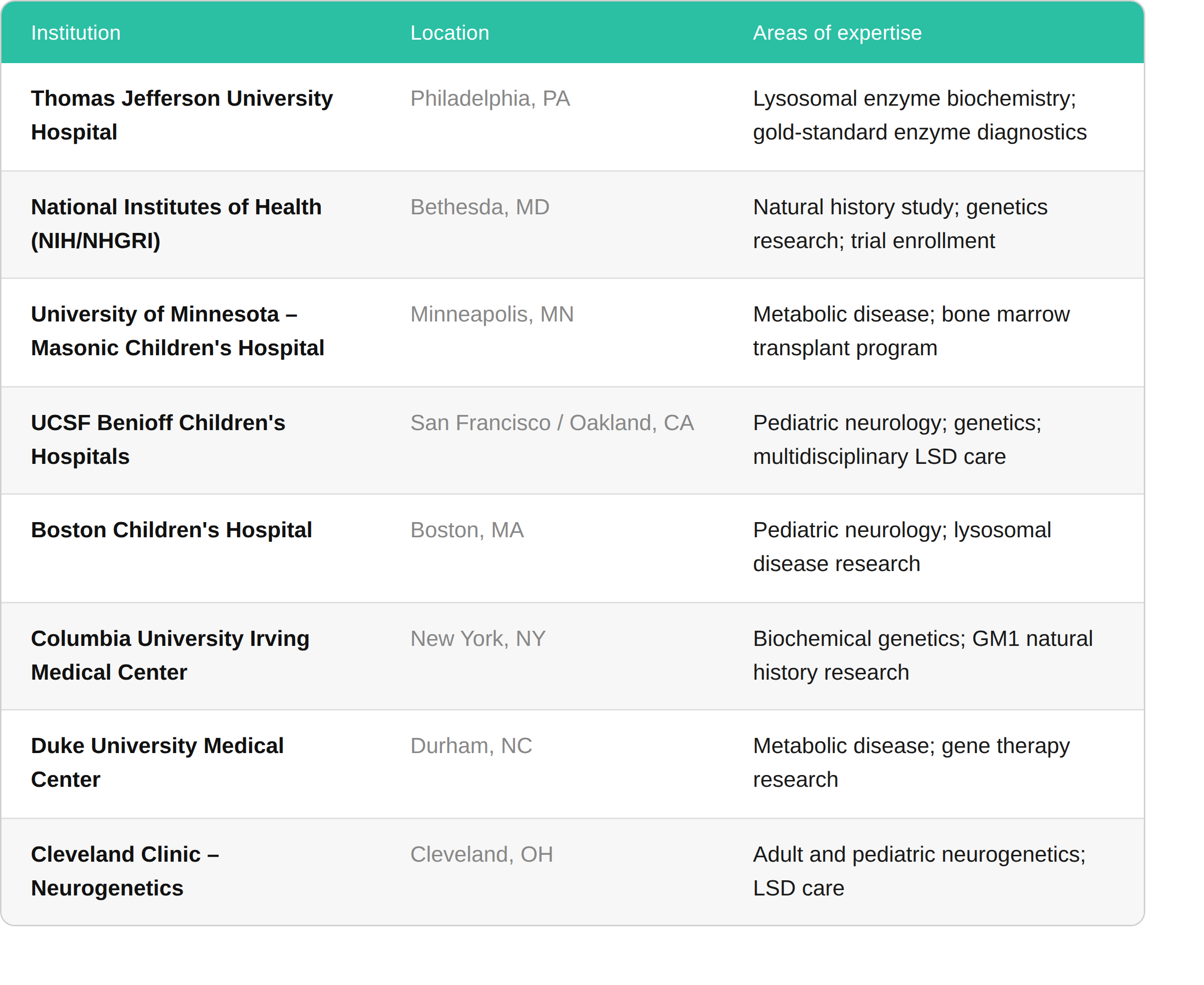
Interpreting results, diagnosing, and managing care for GM1 gangliosidosis requires a specialist with expertise in lysosomal storage disorders. The following centers have active clinical programs or published research in GM1:
To find a genetic counselor near you, visit the National Society of Genetic Counselors’ Find a Genetic Counselor directory.
Part IV: Cost, Insurance and Financial Assistance
Beta-galactosidase Enzyme Testing
Covered by most major commercial insurance plans and Medicaid when ordered with appropriate clinical indication. The CPT code for enzyme testing is 82657 which may be requested for prior authorization.
GLB1 Genetic Testing
Coverage varies by plan. Many insurers cover single gene, multi-gene panel and exome/genome testing when there is documented clinical suspicion. Many CPT codes are used and can be provided by the laboratory for a test of interest when requested to determine prior authorization.
Some insurers may require prior authorization. If denied, a written appeal with a clinical letter of necessity from a geneticist is often effective.
Prior Authorization Tips
Encourage your healthcare provider to request a prior authorization before the test is ordered. Include documentation of symptoms, family history, and supporting medical literature in the authorization request. The ICD-10 diagnosis code for GM1 gangliosidosis is E75.19.
Financial Hardship Options
Most major genetic testing laboratories (Ambry Genetics, GeneDx, Labcorp|Invitae, PreventionGenetics) have dedicated financial assistance teams that can discuss rates for uninsured or underinsured patients.
- Always call the laboratory before assuming a test is unaffordable – options almost always exist.
About Cure GM1 Foundation
Cure GM1 Foundation is a nonprofit organization founded by families living with GM1 gangliosidosis. Our mission is to accelerate the development of effective treatments by funding research, supporting families, and advocating for improved diagnostic access and care standards.
This document is published as a public educational resource and should not be used to diagnose or treat any health condition. Please consult a medical professional for questions about diagnosis and management. For questions, corrections, or updated information, contact us at info@curegm1.org or visit curegm1.org.
The Research Behind This Guide
This summary is based on five published studies. If you would like to read them or share them with your medical team, they are listed here:
- Regier DS, Tifft CJ, Rothermel CE. GLB1-related disorders. In: GeneReviews® [Internet]. Seattle (WA): University of Washington, Seattle; 2013 Oct 17 [updated 2021 Apr 22]. https://www.ncbi.nlm.nih.gov/books/NBK164500/ Accessed August 13, 2026.
- Arash-Kaps L, Komlosi K, Seegräber M, et al. The clinical and molecular spectrum of GM1 gangliosidosis. J Pediatr. 2019;215:152-157.e3. doi:10.1016/j.jpeds.2019.08.016. PMID 31761138.
- Caciotti A, Cellai L, Tonin R, et al. Morquio B disease: from pathophysiology towards diagnosis. Mol Genet Metab. 2021;132(3):180-188. doi:10.1016/j.ymgme.2021.01.008. PMID 33558080.
- Lewis CJ, Johnston JM, Zaragoza Domingo S, et al. Retrospective assessment of clinical global impression of severity and change in GM1 gangliosidosis: a tool to score natural history data in rare disease cohorts. Orphanet J Rare Dis. 2025;20(1):125. doi:10.1186/s13023-025-03614-6. PMID 40087722.
- Zagaynova VA, Nasykhova YA, Tonyan ZN, et al. Case report: preimplantation genetic testing for infantile GM1 gangliosidosis. Front Genet. 2024;15:1344051. doi:10.3389/fgene.2024.1344051. PMID 38404665.
Frequently Asked Questions
Prepared by the Cure GM1 Foundation. For more information: curegm1.org | info@curegm1.org
This document does not constitute medical advice. Always discuss treatment decisions with your child’s medical team.