


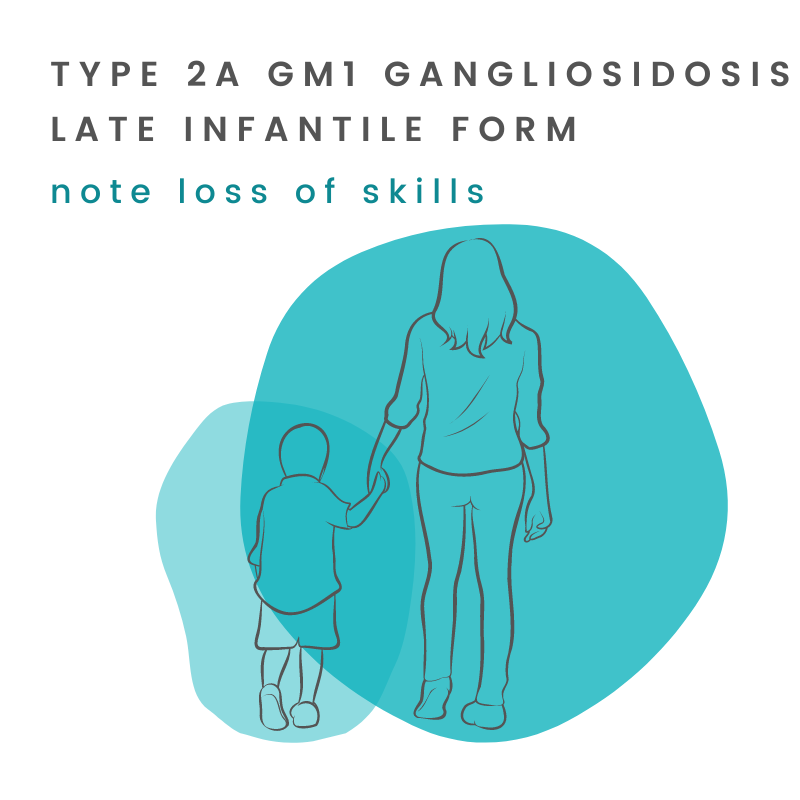
GM1 Gangliosidosis Type 2A – Late Infantile
GM1 gangliosidosis Type 2A, or the late-infantile form of the disease, occurs less frequently than infantile Type 1.
In Type 2A, children develop normally until the onset of symptoms, usually between seven months and three years of age. The clinical symptoms of GM1 Type 2A that are readily observable are of intermediate severity. Abnormal enlargement of the spleen and liver may be absent in children with Type 2A, and facial coarsening typically develops and progresses over time.
Children diagnosed with Type 2A generally live until about 5-10 years old.
Symptoms of GM1 Gangliosidosis Type 2A
Children with the late-infantile form of GM1 gangliosidosis have an earlier onset of symptoms than those with GM1 Type 2B, usually noted around 1 year of age. Those with Type 2A also have a more rapidly progressing disease than those with the juvenile form (GM1 Type 2B), but the symptoms are overall similar.
Children with the late-infantile form of GM1 usually peak developmentally between 12 – 15 months of age, and they lose their ability to ambulate earlier than children with juvenile GM1. While survival is more variable in GM1 Type 2, most children with late-infantile GM1 only survive to 5-10 years of age, a shorter lifespan than children with the juvenile form of the disease.
Gangliosidosis Type 2A and 2B Shared Symptoms
- Hypotonia, muscle weakness
- Loss of speech, slurred speech
- Impaired eyesight, strabismus, nystagmus
- Clumsiness, falling, lack of coordination
- Loss of fine and gross motor skills
- Cognitive impairment
- Intellectual disability
- Cerebral atrophy
- Gait disturbance, ataxia
- Seizures
- Lethargy
- Scoliosis, flattened vertebrae
- Dystonia

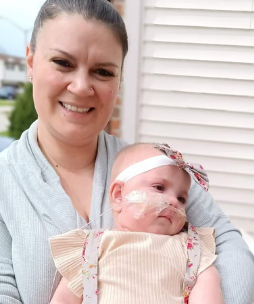
Learn about Violet’s experience as a child diagnosed with late-infantile GM1.
Read Their Stories
Darian’s experience

“Early on in her life, she was able to walk a bit on her own. She could move around and cruise around the house, around furniture. …Over the course of a few days, she just stopped walking abruptly.”
Matt, father of a five-year-old daughter living with Type 2A, late infantile GM1
Clara’s Experience

Help us find effective treatments and therapies so those living with GM1 can live long full lives
Donate to Cure GM1